Toyota Custom-Fit Sunshades and Car Covers — Every Model 2006-2026
Toyota is the largest single-make segment in the Proadsy catalog — 76 vehicle-specific sunshade and car cover fitments across 13 active model lines. This page is the index. If you're shopping for a specific vehicle, the fastest path is the Toyota windshield sunshades collection or the Toyota car covers collection. Read on for the model-by-model breakdown, the Toyota Safety Sense sensor knowledge most generic shades miss, and the install steps that work on every Toyota visor design.
Why a Toyota-Specific Sunshade Matters
Toyota windshields have changed shape more than people realize. The 2006 RAV4 and the 2024 RAV4 share a name and a logo and almost nothing about the glass dimensions. The 2010 Camry's windshield is roughly an inch shorter at the top edge than the 2024 Camry's. The 4Runner has been on the same 5th-generation platform since 2010 — but the sunshade you bought for it then doesn't match the slightly larger 2025 redesign.
Three things actually matter when picking a Toyota sunshade:
- Generation match. Toyota usually keeps a body shape for 6-8 years. Within a generation, the windshield is identical. Across a generation jump (Camry XV70 → XV80, RAV4 XA40 → XA50), the dimensions change by 1-3 inches.
- Trim-level features. Toyota Safety Sense (TSS) versions 2.0 and 3.0 add a sensor cluster behind the rearview mirror. Higher trims (XLE Premium, Limited, Platinum) add rain sensors, lane-keep cameras, and head-up displays — each requires a contoured cutout in the sunshade.
- Hybrid vs ICE. Most Toyota hybrids share the same windshield as their ICE counterparts. The RAV4 Prime is the same glass as the RAV4. The Camry Hybrid uses the standard Camry windshield. Knowing your hybrid is mechanically a Camry simplifies the search.
Model Coverage at a Glance
Active Toyota fitments in the catalog, organized by body style:
| Model | Generation Window | Body Type | Most Popular Product |
|---|---|---|---|
| Camry | 2018-2026 (XV70/XV80) | Mid-size sedan | Camry car cover |
| Corolla | 2019-2026 (E210) | Compact sedan | Corolla windshield sunshade |
| RAV4 | 2019-2026 (XA50) | Compact SUV | RAV4 windshield sunshade |
| RAV4 (older) | 2013-2018 (XA40) | Compact SUV | 2013-2018 RAV4 sunshade |
| Highlander | 2020-2026 (XU70) | 3-row SUV | Highlander sunshade |
| 4Runner | 2010-2024 / 2025+ | Mid-size body-on-frame SUV | 4Runner car cover |
| Tacoma | 2016-2023 (3rd gen) / 2024+ (4th gen) | Mid-size truck | Tacoma car cover |
| Tundra | 2022-2026 (3rd gen) | Full-size truck | Tundra sunshade — see Toyota collection |
| Prius | 2023-2026 (XW60) | Hybrid hatchback | Prius car cover |
| Sienna | 2021-2026 (XL40) | Hybrid minivan | Sienna car cover |
| Venza | 2021-2025 | Crossover | Venza sunshade — see Toyota collection |
| bZ4X | 2023-2026 | EV crossover | bZ4X car cover |
| C-HR | 2018-2023 | Subcompact crossover | C-HR sunshade |
| GR86 | 2012-2023 | Sport coupe | GR86 sunshade |
The full collection is at Toyota windshield sunshades (60+ SKUs across regular and ice crystal variants) and Toyota car covers (16+ SKUs).
Toyota Safety Sense (TSS) Sensor Knowledge
The single biggest install issue Toyota owners hit is the TSS sensor cluster. If you have any Toyota built after roughly 2018 in XLE / Premium / Limited / Platinum trim — and many newer base trims as well — there's a forward-facing camera plus a millimeter-wave radar housing behind the rearview mirror.
TSS 2.0 (most 2020-2024 Toyotas)
TSS 2.0 packs the camera, radar, and rain sensor into a single housing roughly 4 inches wide and 6 inches tall, mounted to the upper windshield glass center. A correctly designed sunshade for TSS 2.0 vehicles has a U-shaped notch at the top center of the shade — when installed, the housing pokes through the notch and the rest of the shade lies flat.
What goes wrong with generic sunshades:
- No notch: the shade bunches up around the housing, creating a sunlight gap at the top center plus a fingertip-sized hot spot directly above the dashboard.
- Wrong-size notch: the notch is sized for an older Lexus or a different Toyota and doesn't match the actual housing — same outcome, just frustrating to install.
- Pressure on the housing: some shades press against the camera lens cover. Toyota's TSS will throw a "Pre-Collision System Disabled" warning on startup until you remove the shade. The warning self-clears, but it's annoying.
TSS 3.0 (most 2024+ Toyotas)
TSS 3.0 in the 2024+ Tacoma, Tundra, Camry, and Crown moves to a more compact housing with the camera and radar split. The notch shape on a 3.0-compatible sunshade is narrower than the 2.0 notch. Most of our 2024+ fitments are designed for TSS 3.0.
How to Tell Which You Have
Look up at the area behind your rearview mirror. If you see a single square housing roughly 4×6 inches, that's TSS 2.0. If you see two smaller separate units (a camera lens plus a radar emitter), that's TSS 3.0 or sometimes a third-party retrofit. The sunshade product description on the Proadsy listing will state the matching sensor version explicitly — "TSS 2.0 compatible" or "TSS 3.0 compatible."
Hybrid and Plug-In Hybrid Considerations
Toyota was the first company to make hybrids mainstream and currently sells the broadest hybrid lineup of any brand. Sunshade considerations:
- Camry Hybrid: identical glass to the standard Camry. Same shade fits.
- RAV4 Hybrid and RAV4 Prime: identical to the standard RAV4 within the same generation. The Prime PHEV does have a slightly larger center display, but this is dashboard-mounted and doesn't affect sunshade fit.
- Highlander Hybrid: identical glass to the standard Highlander.
- Sienna: entire 2021+ lineup is hybrid-only. One sunshade fits all trims.
- Prius: the 2023+ XW60 redesign has a noticeably more raked windshield than the previous XW50 — it's almost coupe-like. Older Prius sunshades from 2016-2022 do not fit the XW60. The Toyota collection has the XW60-specific listing.
- bZ4X: Toyota's first dedicated EV. The windshield shape is shared with the Subaru Solterra (same platform). bZ4X sunshades fit the Solterra and vice versa.
Install Steps That Work on Every Toyota
Toyota visor designs have remained remarkably consistent across generations. Steps that work on a 2008 Camry also work on a 2025 RAV4:
Step 1: Pull Both Visors Down
Start with the visors fully extended. The sunshade's top edge slides behind both visors at the same time — pre-positioning the visors saves the awkward one-handed install most people try first.
Step 2: Position the Top Edge
If your shade has a TSS sensor notch, line the notch up with the housing first, then slide the top edge behind the visors. The notch should sit symmetrically around the housing.
Step 3: Flip the Visors Up
The visors pin the top edge against the headliner. The shade is now anchored at three points (left visor, right visor, dashboard).
Step 4: Tuck the Bottom Edge
Press the bottom edge of the shade into the gap between the dashboard and the windshield base. On most Toyotas this gap is about 3/8 of an inch — wide enough to hold the shade, narrow enough to grip it.
Step 5: Confirm No Daylight Visible
Sit in the driver's seat. You shouldn't see any sunlight passing the edges of the shade. If you can see daylight at the top corners or along the A-pillars, the shade is one size too small or installed off-center.
The whole process takes about 15 seconds after the second or third install. Removal is the reverse — flip the visors down, slide the shade out, fold along the existing creases, store in the included pouch.
Toyota-Specific Quirks Worth Knowing
4Runner: The "Old But Loved" Case
The 5th-gen 4Runner ran from 2010 to 2024 — fourteen model years on essentially the same body. The 2025 redesign moved to a slightly larger windshield. If you have a 2010-2024 4Runner, you can use any "2010-2024 4Runner" listed sunshade interchangeably. If you have the new 2025+, you need the new-gen-specific listing.
Camry: The Brakes Hard at 2018
The 2018 Camry redesign (XV70 generation) brought a much wider, more aggressively styled front end. Pre-2018 Camry sunshades will leave roughly 2 inches of glass exposed on each side of a 2018+ Camry. The XV80 facelift in 2025 kept the same windshield, so 2018-2024 sunshades fit 2025-2026 too.
Tacoma: Two Generations in Active Service
The 3rd-gen Tacoma (2016-2023) and the 4th-gen Tacoma (2024+) have different windshields. The 4th gen is slightly wider with a more upright pillar angle. Sunshades are not interchangeable between generations.
Prius: The 2023 Redesign Changed Everything
The Prius from 2016-2022 was the homely-but-efficient car everyone made fun of. The 2023 redesign (XW60) is genuinely good-looking with a low, raked windshield. The new Prius is much more like a small coupe than a hatchback in glass dimensions, which means none of your old Prius accessories fit. Make sure the sunshade listing explicitly says "2023+" or "XW60."
Land Cruiser: Reborn in 2024
The Land Cruiser disappeared from US sales in 2021, then returned for 2024 on the new TNGA-F platform shared with the 4Runner and Sequoia. The 2024+ Land Cruiser sunshade listing exists; the older 200-series Land Cruiser shades are not in current production.
Climate-Specific Recommendations for Toyota Owners
Phoenix, Vegas, Inland California (Extreme UV)
Toyota dashboards age well in moderate climates but show fatigue in extreme UV — particularly the soft-touch dash material on the 2018+ Camry and the 2020+ Highlander. The fix is straightforward: use a windshield sunshade every single time you park, not just on hot days. Pair it with side window shades for the rear seats if you have kids in car seats, since the rear quarter windows on the Highlander and 4Runner take direct afternoon sun on east-west streets.
For long-term outdoor parking (week+), add a 6-layer car cover. The 4Runner car cover and Tacoma car cover are sized correctly for those longer-bodied vehicles where sedan-cut covers fall short.
Northeast and Midwest (Mixed Seasons)
The dominant concern here is winter ice. The ice crystal version of Toyota sunshades has a different layer structure — outer waterproof shell, middle insulation, non-stick inner — that lifts off the morning ice in a single sheet. Many Toyota owners in mixed climates run a regular reflective shade in summer and switch to the ice crystal in November. Both versions are listed for most Toyota models in the Toyota collection.
Pacific Northwest (Mild but Wet)
Less UV stress than the Sun Belt but constant moisture. The biggest concern is mildew on stored car covers — keep the cover dry between uses. A breathable 5- or 6-layer cover is essential; sealed waterproof covers trap moisture and create algae stains within weeks. The microporous PU layer in our Toyota car covers handles this case.
Care and Maintenance
Toyota sunshades and covers last longer with minimal upkeep:
- Sunshade: wipe with a damp cloth every few months. Avoid harsh detergents — they can degrade the reflective coating. Store folded along the original creases.
- Car cover: rinse with cold water and mild detergent once a year. Hang to dry. Don't machine wash — agitation damages the seams. Inspect tie-down loops monthly during winter use.
Frequently Asked Questions
Will a Lexus sunshade fit my Toyota?
In some cases, yes — Lexus models share platforms with Toyota. The Lexus RX and Toyota Highlander share the GA-K platform but have different windshields. The Lexus GX and Toyota 4Runner share the J150 platform and have very similar (but not identical) windshields. Generally, don't cross-shop unless the listing explicitly says compatibility.
Do you make sunshades for the Crown?
Yes. The 2023+ Crown is in the catalog as an ice crystal listing. Browse the Toyota collection.
What about the Sequoia and Land Cruiser?
Sequoia: 2023+ TS900-series fitments are available. Pre-2022 second-gen Sequoia (which ran from 2008-2022) is currently not in active production. Land Cruiser: the 2024+ J250 listing is available; older 200-series is not.
Do hybrid versions need a different sunshade?
No — Toyota uses identical glass between hybrid and ICE versions of the same model in the same generation. A Camry sunshade fits the Camry Hybrid; a RAV4 sunshade fits the RAV4 Hybrid and RAV4 Prime.
Find Your Toyota
If you've identified your generation, jump straight to the matching product on the Toyota windshield sunshades collection or the Toyota car covers collection. If you're not sure of your generation, the year/make/model finder on the Proadsy homepage handles the lookup automatically. Need help with a non-standard trim or limited edition — message the team via the contact page; we respond within 24 hours.
For a deeper look at why custom-fit beats universal on the RAV4 specifically, see our RAV4 windshield sunshade buying guide.
Real Toyota owner stories
From our verified Judge.me feed (6,000+ reviews across the Proadsy catalog). These are real Toyota owners who left us reviews — not paid testimonials, not edited.
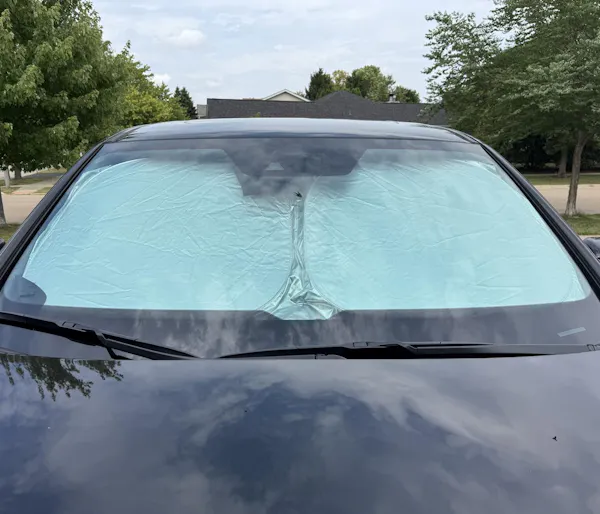
"I have a 2025 Honda Ridgeline, I spent about 1 hour reading over all the reviews of the front windshield cover for this brand as well as other brands. I bought 3 in total. They all will work effectively. I tested it on my 2016 Toyota Sienna as well as my 2016 Acura RDX. Because of the way they are made, there is a lot of flexibility to the coverage and size flexibility. It all worked. The other two brands cost around"
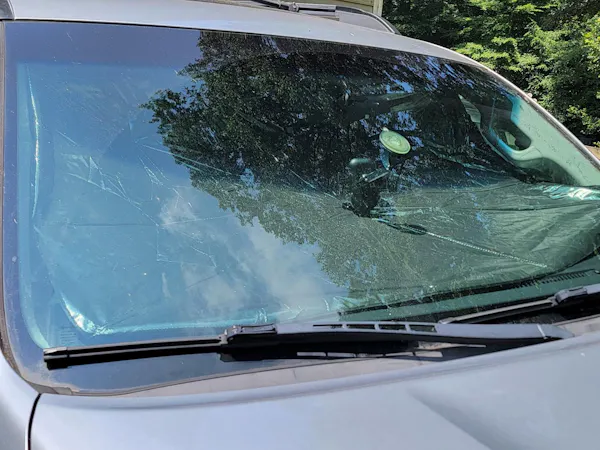
"This is the easiest to use windshield sun screen that I've ever used. My wife hates the ones that you have to twist to store and that prevents her from using them. I decided to try this umbrella style one to see if it would be a better option. The first thing that surprised us was how small it is in the folded up form. It's the size of a portable umbrella (roughly 15 inches long). It opens just like an umbrella and f"
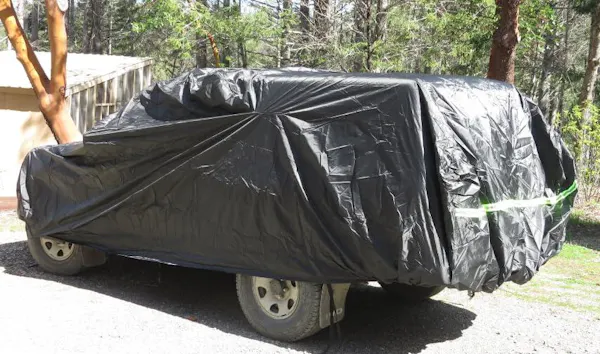
"Fits our Tacoma pickup truck well. The only draw back is you will need to unscrew your antenna and when we tried to do this for our old truck the antenna broke off. But no fault of the cover itself (except that it does not have a feature to accommodate for this). Overall seems to be good quality, thick, durable material. You can also use it to cover other things like wood piles, which we may try. Cannot yet speak to "
Fitment notes — what makes Toyota different
Toyota Safety Sense (TSS 2.5+ on 2022+ models) mounts the forward camera and millimeter-wave radar against the inside of the windshield, just below the rear-view mirror cluster. Our Toyota patterns dip around the camera housing on every model — RAV4, Camry, Highlander, Sienna, 4Runner, Tacoma, Tundra. The shade sits flush; no bunching at the camera, no obstruction of the rain sensor (driver-side, top of glass). The pattern was laser-scanned from a 2023 production RAV4 and a 2024 Camry; pattern fits identically across the listed year range because Toyota does not change windshield aperture mid-generation.
