
Most "winter car cover" advice you'll read online is wrong. The thicker-equals-better assumption has caused more paint damage than it has prevented. The real challenge in winter is not blocking snow — it's preventing the moisture trapped underneath from sitting against your paint for weeks.
This guide covers what actually matters when picking a car cover for snow, ice, and freezing rain — based on what we've seen across thousands of winter-deployed covers.
The Three Things a Winter Car Cover Has to Do
A cheap summer-rated car cover dropped on a snowy car will survive the snow itself fine. The problem starts a week later, when the snow underneath the cover melts during a warm afternoon, refreezes overnight, and the trapped moisture sits flush against your paint for days. That's how clear coat fails and rust starts.
A real winter cover has to do all three of these — not just one:
- Block precipitation from entering the fabric (waterproof outer shell)
- Allow water vapor to escape from underneath (breathable inner layer)
- Stay put in 30+ mph wind gusts (proper fit + tie-down system)
If your cover does only step 1, you've turned your car into a sweaty greenhouse. If it does only step 2, you've got a wet blanket on your hood every morning. The combination is what matters.
Material Comparison: What Each Layer Does
| Layer Count | Typical Construction | Winter Performance |
|---|---|---|
| 1 layer | Single polyester or polypropylene | Poor — soaks through, no insulation, tears easily on ice |
| 3 layers | PE film + polyester batting + soft inner | OK — waterproof but not very breathable, traps moisture |
| 5 layers | Microporous PU + non-woven + foam + non-woven + soft fleece | Good — waterproof and breathable, sheds snow, stretches at temp extremes |
| 6 layers | 5-layer construction + extra UV-resistant outer membrane | Best — long-term winter durability, won't crack at -10°F |
The "more layers is better" instinct is roughly correct, but only up to about 6 layers. Beyond that you're adding bulk that makes the cover impossible to fold and traps more moisture than it sheds.
Why Universal Covers Fail in Winter
Universal-fit covers work in summer because the consequences of a loose fit are minor — some flapping, some scratched paint. In winter, a loose fit becomes catastrophic:
- Wind funnel effect: Cold air enters at the loose corners and circulates underneath, undoing the thermal buffer the cover would otherwise provide. Frost forms on your paint just like an uncovered car.
- Snow pooling: Loose fabric on top of the hood and roof sags into a basin. Snow accumulates 3-4 inches deep in those pockets. When it finally melts, you get a concentrated puddle pressing on the paint.
- Tie-down failure: Generic covers come with one or two underbody straps. In a 30 mph gust the cover lifts off the front, snags on the hood emblem, and rips. We've seen one-month-old universal covers shredded into ribbons after a single nor'easter.
A custom-fit cover sized to your exact vehicle (sedan vs SUV vs full-size truck) hugs the body. There's no slack to flap, no pockets to pool snow, and the tie-down points are positioned where they actually anchor against your wheel arches.
The Right Cover for Your Vehicle Type
Vehicle silhouette matters as much as material when picking a winter cover. Three common categories and what to look for:
Sedans and Coupes
Sedans are the easiest case — the standard 5-layer cover works fine. Look for elasticized hems on the front and rear bumpers, plus at least two underbody straps. The Dodge Challenger car cover and Toyota Camry car cover are good examples of correctly fitted sedan covers.
SUVs and Crossovers
SUVs need extra height in the roof section and a longer rear drop to reach the lower bumper. A car-cut cover on an SUV stops short of the rear glass and leaves the tailgate exposed. The Toyota 4Runner car cover and RAV4 car cover are sized for the taller body and extended rear.
Full-Size Trucks
Trucks are the hardest case. A full-size pickup like the F-150 or F-250 has a 6.5 to 8-foot bed plus an extended cab — total length over 22 feet. A cover that's even 6 inches short on either end will let snow into the bed every storm. The Ford F-150 car cover and Ford F-250 Super Duty car cover are cut for the extended-cab 6.5-foot bed configuration. If you have a different bed length or cab style, double-check the listed dimensions.
Installation: Get This Right or the Cover Won't Last
Most winter cover failures we see come from incorrect installation, not material defects. Three rules:
1. Brush Snow Off Before Removing the Cover
If you've got 4 inches of snow on top, sweep it off before pulling the cover. Trying to drag a snow-loaded cover across the hood scratches the paint with every grain of grit underneath. Some owners keep a soft-bristle broom by the door for this exact purpose.
2. Tie-Downs Should Be Snug, Not Tight
Cinching the underbody straps too tight pulls the fabric into bunched ridges that create new low points where water collects. Tie just enough that the cover doesn't lift in wind — you should be able to slide a flat hand between the strap and the underbody.
3. Park Facing Into the Prevailing Wind
If your driveway lets you choose, point the front of the car into the wind direction storms come from. The cover's front-end tie-downs are stronger than the rear-end ones; wind hitting the rear pushes the cover into the body, while wind hitting the front pushes it up and over.
What About Garage-Kept Cars?
If your car is in a heated garage, you probably don't need a winter-rated cover. But if it's in an unheated detached garage or a carport, you do — condensation on cold mornings is the same paint enemy as snow itself. A breathable indoor cover is the right call there. We don't carry indoor-only covers — our outdoor 6-layer covers double as overkill indoor covers for the same money.
When to Replace a Winter Cover
A quality 6-layer cover will last 4-6 winters in the Northeast or 6-8 winters in milder climates. Signs it's time to replace:
- Visible UV chalking or fading on the outer surface (means the waterproof membrane is breaking down)
- Stretched-out elastic hems that no longer hug the bumper
- Frayed tie-down loops or grommets pulling out of the fabric
- Inner fleece layer matted or shredded — the soft layer is what protects paint from the cover itself
Region-Specific Notes
Northeast (Boston, NYC, Philly, DC)
Mixed precipitation is the issue here. A storm drops 4 inches of wet snow at 32°F, then the temperature drops to 20°F and locks the snow into a sheet of ice on top of the cover. Two days later it warms to 38°F and the whole frozen mass slides off. A 5-layer cover with smooth outer surface handles this better than a textured outer surface — ice slides off smooth fabric and grips textured fabric.
Mountain West (Denver, Salt Lake, Boise)
Dry, light snow plus very high UV at altitude. The UV at 5,000+ feet is roughly 25% stronger than at sea level, which beats up the cover faster than you'd expect for a "winter" climate. Anyone in this region should look at 6-layer covers specifically — the extra UV-resistant outer layer is worth it.
Lake Effect Belt (Buffalo, Cleveland, Chicago)
4-foot snowfalls in 24 hours are not rare. The cover has to handle the weight of wet snow without the tie-downs ripping out. Reinforced grommets and at least 4 underbody tie-down points are essential. Thinner covers with 2 tie-downs end up shredded after the first true lake-effect storm.
Pacific Northwest (Seattle, Portland)
Less snow than the rest of the list — but constant rain plus moss/algae growth on parked cars. A breathable cover is critical here; a sealed waterproof cover traps enough moisture against paint that you can develop algae stains in 2-3 weeks of continuous use. The microporous PU membrane in 5- and 6-layer covers handles this case correctly.
Off-Season Storage
Most owners use a winter cover from November through March, then store it through summer. Three rules for storage that extend the cover's life:
- Wash and fully dry before storing. Storing a cover with road salt or trapped moisture causes seam degradation that won't show up until you pull it out the following November.
- Store loosely folded, not crushed. Sharp creases held for 8 months cause permanent fold lines that crack the waterproof membrane on first use.
- Don't store in the trunk. Heat in a parked car in summer reaches 140°F+ in the trunk. The waterproof membrane chemistry breaks down at sustained high temperatures.
A breathable storage bag (most quality covers come with one) stored in a closet or basement is ideal.
Bottom Line: Fit and Breathability Beat Thickness
The single biggest upgrade you can make for winter is going from a universal cover to a vehicle-specific one. Materials matter, but a perfectly sized 5-layer cover will outperform a 7-layer "extreme weather" cover that's two sizes too big.
Browse vehicle-specific options in our custom car cover collection or use the vehicle finder to filter by make, model, and year. If you're not sure which size matches your trim level, our team responds within 24 hours — message us through the contact page.
Real owner reviews — Car Cover for Snow and Winter
Pulled from our verified Judge.me review feed. We did not edit, paraphrase, or shorten beyond what fits — these are real buyers who left us reviews on this product category.
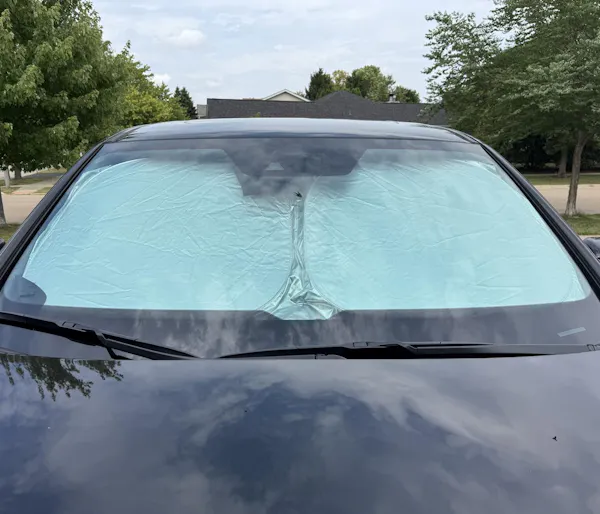
"I have a 2025 Honda Ridgeline, I spent about 1 hour reading over all the reviews of the front windshield cover for this brand as well as other brands. I bought 3 in total. They all will work effectively. I tested it on my 2016 Toyota Sienna as well as my 2016 Acura RDX. Because of the way they are made, there is a lot of flexibility to the coverage and size flexibility. It all "
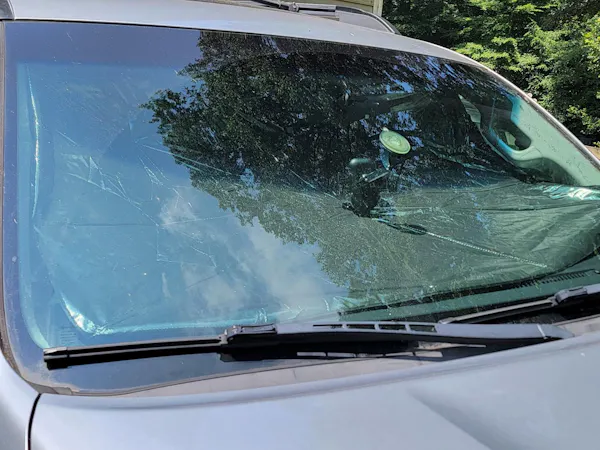
"This is the easiest to use windshield sun screen that I've ever used. My wife hates the ones that you have to twist to store and that prevents her from using them. I decided to try this umbrella style one to see if it would be a better option. The first thing that surprised us was how small it is in the folded up form. It's the size of a portable umbrella (roughly 15 inches lon"
Sources & References
- ASTM D751-19 — Coated Fabrics Test Methods — Standard methods covering coated-fabric strength and hydrostatic resistance.
- National Weather Service — Winter Weather Safety — Official U.S. government winter-precipitation and cold-safety guidance.
- ASTM D5034-21 — Breaking Strength of Textile Fabrics — Standard test method for fabric tensile/grab strength.
