
Electric vehicles have a sun problem that gas cars don't — and it's not just about cabin comfort. Every degree of dashboard heat reduces real-world range, accelerates battery thermal management cycling, and damages the increasingly large piece of glass most EV makers have decided to put on the roof.
This guide covers why a high-quality windshield sunshade pays back faster on an EV than on a gas car, and which sunshade fits each of the five EVs we've designed dedicated covers for: Hyundai Ioniq 5, Kia EV9, Rivian R1T, Ford Mustang Mach-E, and Lucid Air.
Why EVs Need Better Sun Protection Than Gas Cars
1. Range Loss From Heat
EV efficiency drops in two directions away from 70°F: cold and hot. The hot-side drop is less famous than the winter-range scare stories, but it's measurable. A study published in 2024 measuring real-world Model 3 efficiency showed roughly 18% range loss when ambient temperature was 95°F and the cabin started hot. The reason: the AC has to do twice the work to cool a 130°F dashboard, and battery thermal management runs harder during driving to keep cells in their optimal range.
A custom-fit windshield sunshade keeps the dashboard 30-40°F cooler. That's not a marginal effect — it cuts the AC's initial load almost in half and shaves several percent off the trip's energy use.
2. Glass Roofs and Greenhouse Effect
Most modern EVs have full-length glass roofs. The Ioniq 5, Mustang Mach-E, Lucid Air, and Rivian R1T all ship with one as standard or near-standard equipment. These roofs have IR-blocking layers, but they don't block visible light or all the heat. On a 100°F day in direct sun, the glass roof itself can hit 145°F.
The roof is non-removable glass, so you can't put a sunshade on it. But the windshield is the larger contributor to cabin heat — and that you can control. Skipping the windshield sunshade because "the roof lets light in anyway" gets the math backwards.
3. Display Sensitivity
EVs put the central display front and center, often pillar-to-pillar. The Lucid Air has a 34-inch curved display. The Mach-E has a 15.5-inch portrait screen. These displays are LCD or OLED panels that don't love sustained exposure to 130°F+ dashboard temperatures. Burn-in on the OLEDs and contrast degradation on the LCDs is real and not covered by warranty.
Owners of premium EVs in particular have a strong incentive to keep the dashboard cool — replacement cost on these center stack displays runs into the thousands.
EV-Specific Fitments
Each of the five EVs we make a sunshade for has a unique windshield curvature. The Mach-E and Ioniq 5, despite being roughly the same vehicle category, have completely different glass shapes — the Ioniq 5 is steeper and more squared, the Mach-E follows the SUV-coupe curve.
Hyundai Ioniq 5 (2022-2026)
The Ioniq 5's vertical, almost slab-like windshield is the most squared-off in the group. A correctly fitted sunshade reaches the wide corners without curling — universal shades fail badly on this car. See the Ioniq 5 dedicated page for the full lineup including ice crystal and umbrella variants. Direct fitment: Hyundai Ioniq 5 ice crystal sunshade.
Kia EV9 (2024-2026)
The EV9 is Kia's full-size three-row electric SUV — visually boxy, mechanically related to the Ioniq 5 platform but on a stretched frame. The windshield is wider and slightly more upright. See the Kia EV9 page for the matching sunshade.
Rivian R1T (2022-2026)
The R1T is the only electric pickup truck in this group and has the largest windshield surface area. A 4-layer custom shade for the R1T is roughly 30% larger than a sedan shade and folds into a noticeably bigger pouch. Worth it — the truck's flat dashboard with the wood/aluminum trim is especially sensitive to UV fade. See Rivian R1T page.
Ford Mustang Mach-E (2021-2026)
The Mach-E's coupe-roofline rake means the windshield is more steeply angled than the Ioniq 5 or EV9. A correct sunshade for the Mach-E should have a slightly trapezoidal cut to follow the A-pillar slope. Generic SUV-shaped shades will leave triangular gaps on either side near the top corners. See Mach-E page.
Lucid Air (2022-2026)
The Lucid Air sedan has the steepest windshield rake of the group — it's nearly a wraparound. Universal shades cannot follow the curve and end up with multiple inches of exposed glass at the top center. A custom contoured shade is essentially mandatory if you want any meaningful temperature reduction. The Lucid Air dashboard, with its 34-inch curved Glass Cockpit display, is also the most expensive interior component in the group — replacing the display assembly out of warranty runs into five figures. The case for sun protection on a Lucid is straightforwardly economic. See Lucid Air page or browse all five EVs on the EV editions overview.
How Sunshade Choice Affects Battery Health Over 5+ Years
Battery thermal cycling — repeatedly heating up and cooling down — is the largest non-charging cause of long-term capacity degradation in EV battery packs. The pack itself is climate-controlled, but ambient cabin temp during driving and parking influences how hard the thermal management system has to work. A pack that runs hot for 4 hours of summer parking, then has to cool down rapidly when AC kicks on at startup, gets more cycles per year than one that starts each drive at a moderate cabin temp. Multiplied across 5 years of summers, the cumulative thermal load matters. A windshield sunshade is the single cheapest mitigation — well under 1% of vehicle cost, with measurable impact on the systems that determine long-term battery health.
What About Tesla Owners?
We don't currently offer Tesla-specific sunshades. Some of our customers have asked about cross-fitting — the answer for the Model Y is unfortunately no, the front windshield is wider than the Mach-E and the curvature is quite different. We update the catalog regularly; check back or sign up for the newsletter for the next round of fitments.
Material: What Works Best for EVs Specifically
Standard 4-layer reflective sunshades work fine on EVs. The optional ice crystal variants — which have a black non-reflective outer surface — are popular among EV owners for two reasons:
- The matte black exterior doesn't scream "removable shade" to passersby, which matters for street-parked EVs in dense urban areas where curb appeal of the parked car is a target for theft and break-ins.
- EV interiors tend toward minimalist white/grey color palettes. The reflective silver shade can look jarring against a Polestar-style interior; the ice crystal black blends in.
Performance-wise the two are essentially equivalent — both block 99% of UV and reduce dashboard temperature by 30+ degrees. The choice is aesthetic.
Other EV Sun-Protection Accessories
Beyond the windshield shade, two other accessories matter for EV owners:
- Side window shades — important for EVs because rear-seat passengers (especially kids in car seats) sit closer to large rear-quarter windows than they would in a smaller ICE car.
- Umbrella sunshades — pop-open shades that deploy in 3 seconds. Good for EV owners who park in different spots throughout the day. The Hyundai Ioniq umbrella sunshade is one example.
For paint protection on EVs parked outdoors long-term, the same advice applies as for ICE — get a vehicle-specific 6-layer cover, not a universal one. EVs have specific contact points (charge port, sensor housings) that universal covers can rub.
Resale Value: Why Sun Damage Hurts EVs More
EVs already have a steeper depreciation curve than ICE cars in most cases. A faded dashboard, cracked steering wheel, or sun-bleached upholstery widens that gap further. The premium-feel materials EV makers use — Alcantara, recycled-fiber cloth, vegan leather — fade or degrade faster than traditional leather under sustained UV.
A 3-year-old Lucid Air with a faded dashboard center console can lose $3,000-5,000 in resale value compared to an identical car with intact interior. The economics on prevention are obvious — a $40 sunshade kept in service for the entire ownership period prevents most of that loss.
Charging Considerations
One thing that's specific to EVs: the windshield sunshade often stays in the car when you're plugged in at a public charger. A few practical notes:
- DC fast charging stations (Electrify America, EVgo, Tesla Supercharger): 20-45 minutes per session. Worth deploying the sunshade during the stop, especially in summer — your battery thermal management runs harder during fast charging when ambient is high, and a cooler cabin reduces baseline cabin AC demand on resume.
- Level 2 home charging: if your car charges in a garage, no sunshade needed. If it's outdoor (driveway), keeping a sunshade on overnight in summer makes a real difference to your morning starting cabin temp.
- Workplace destination chargers: these are the highest-value sunshade scenarios — you're parked 8 hours in direct sun. The cabin temp difference at end of day with vs without a quality sunshade is the difference between "tolerable to drive home" and "needs 5 minutes of preconditioning."
If your EV supports app-based preconditioning (most do), the AC load on preconditioning is dramatically lower with a properly shaded cabin — translates to less battery cycling and sometimes a few extra miles of range remaining at startup.
Bottom Line
EV owners get more measurable benefit from a quality sunshade than gas-car owners — both in cabin comfort and in actual range and battery longevity terms. The fix is cheap relative to the vehicle, and pays back on every hot-day drive.
Browse the dedicated EV detail pages for each model on the EV editions overview, or jump straight to the model pages: Ioniq 5, EV9, R1T, Mach-E, Lucid Air.
Real owner reviews — EV Sunshade Buying Guide
Pulled from our verified Judge.me review feed. We did not edit, paraphrase, or shorten beyond what fits — these are real buyers who left us reviews on this product category.
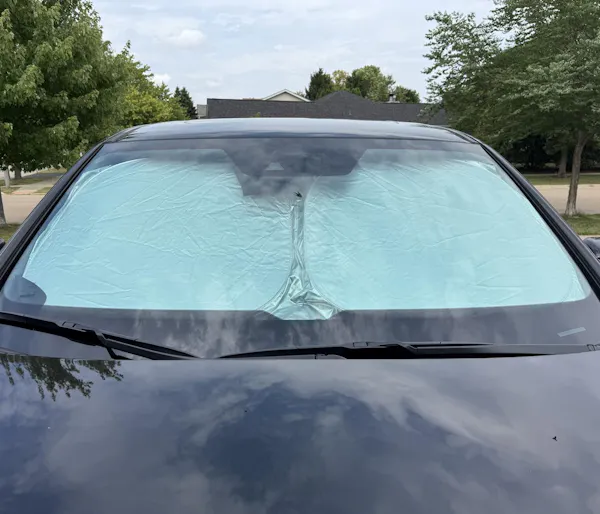
"I have a 2025 Honda Ridgeline, I spent about 1 hour reading over all the reviews of the front windshield cover for this brand as well as other brands. I bought 3 in total. They all will work effectively. I tested it on my 2016 Toyota Sienna as well as my 2016 Acura RDX. Because of the way they are made, there is a lot of flexibility to the coverage and size flexibility. It all "
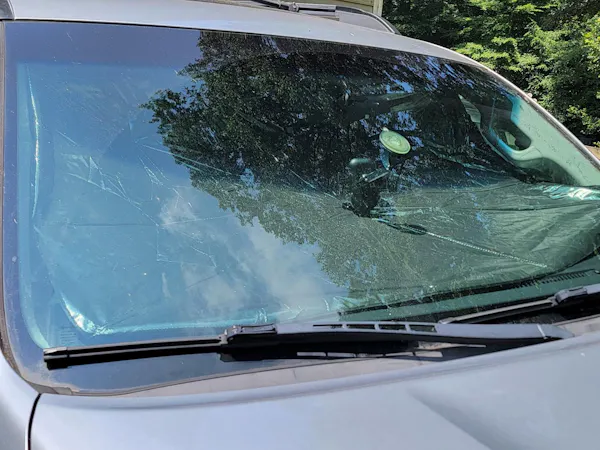
"This is the easiest to use windshield sun screen that I've ever used. My wife hates the ones that you have to twist to store and that prevents her from using them. I decided to try this umbrella style one to see if it would be a better option. The first thing that surprised us was how small it is in the folded up form. It's the size of a portable umbrella (roughly 15 inches lon"
Sources & References
- FuelEconomy.gov (U.S. DOE/EPA) — Fuel Economy in Hot Weather — Official data on hot-weather AC load, fuel economy, and EV range effects.
- Vanos, Middel, Poletti & Selover (2018), Temperature 5(3):276-292 — Peer-reviewed measurement of cabin and surface heating in enclosed vehicles under solar radiation.
- NoHeatStroke.org — Jan Null, San Jose State University — Vehicle cabin temperature-rise data and pediatric vehicular heatstroke tracking since 1998.
