
The Ford F-150 has been America's best-selling vehicle for over four decades — and the most-asked truck question we get is which sunshade fits which generation. The 2015-2020 13th-gen and 2021-2026 14th-gen have visually similar but mechanically different windshields. Get the wrong one and you're staring at a gap at the top edge of the glass.
This guide covers the F-150 generation differences, what to look for in a truck-specific sunshade, and how to round out sun protection for the cab. If you already know your year, jump to the Ford windshield sunshades collection or the homepage vehicle finder.
F-150 Generations Since 2015
The F-150 has had two major redesigns in the last decade:
| Generation | Years | Body Code | Key Notes |
|---|---|---|---|
| 13th gen | 2015-2020 | P552 (aluminum body launch) | First aluminum-body F-150; windshield visually upright, slightly narrower |
| 14th gen | 2021-2026 | P702 | Wider front end, larger windshield surface, new sensor housing |
The 14th-gen windshield is wider and taller than the 13th-gen. A 13th-gen sunshade leaves a gap at the top of a 14th-gen — small enough that some owners don't notice initially, large enough to seriously degrade thermal performance.
13th-Gen (2015-2020) Specific
The 13th-gen F-150 windshield is more upright and has a narrower top. Most aftermarket "F-150 universal" sunshades target this generation by default, which is why the 14th-gen owners often find them too small.
Direct fitments for 13th-gen:
14th-Gen (2021-2026) Specific
The 14th-gen redesign brought a wider front fascia and a noticeably larger windshield. The high-spec trims (King Ranch, Platinum, Limited, Raptor) include rain sensors and lane-keep cameras behind the rearview mirror that need a contoured cutout in the sunshade — generic sunshades don't account for this.
Direct fitments for 14th-gen:
- Ice crystal black version — matte black outer, fits the 14th-gen windshield
- Umbrella-style pop-open sunshade for quick deployment at multiple parking stops
What Makes a Truck Sunshade Different From a Sedan Sunshade
1. Surface Area Is Larger
An F-150 windshield is noticeably larger than a Camry's. That extra area means more reflective surface needed, more layers needed to keep weight reasonable, and a folding design that doesn't end up the size of a yoga mat.
2. The Dashboard Is Wider and Flatter
F-150 dashboards are wider edge-to-edge than sedan dashboards. Sun that gets past a too-small sunshade hits a much larger area of plastic and leather, accelerating fade and warping. Over time that can show up as heat warping around the gauge cluster surround in high-sun states.
3. Tall Cabin = Different Geometry
The F-150's tall cabin and high seating position mean the sun angle through the windshield is different than in a sedan. A sunshade has to cover the full height of the glass, including the top edge that wraps slightly into the roof. Cheap shades leave the top inch exposed, where the sun shines through onto the dome light, rearview mirror, and overhead console — all of which get hot enough to be uncomfortable to touch.
Beyond the Windshield: Full F-150 Sun Protection
Trucks parked in direct sun all day take the most paint and interior damage of any vehicle category. Three accessories work as a system:
Side Window Shades
The F-150's tall side windows let in significant UV from low-angle morning and evening sun. The 2015-2020 F-150 side window shade set covers the front and rear side windows on Crew Cab and SuperCrew configurations. There's a slightly different cut for the SuperCrew vs SuperCab on the 13th gen — check cab-configuration fitment before ordering.
Full Truck Cover
For overnight parking outdoors, the windshield sunshade alone isn't enough. The hood and roof take direct sun all day. A full 2008-2026 Ford F-150 All-Weather Car Cover is sized for the SuperCrew with the 6.5-foot bed (the most common configuration), and the same listing also covers the older 2015-2024 trucks.
Umbrella Sunshade for Quick Deployment
If you're a contractor or fleet user making multiple stops a day, the foldable umbrella sunshade opens quickly. The F-150 umbrella sunshade sits above the dashboard like a pop-open umbrella and folds back into a compact disc when you start driving.
Work Truck vs Daily Driver Use Patterns
F-150s see harder daily use than most vehicles. Two distinct patterns emerge in our customer data:
Daily Commuter (Single Long Park)
Park at the office at 7 AM, drive home at 5 PM. The sunshade goes in once and comes out once. For this pattern, the standard dual-layer reflective shade is the right call — durability under daily install/remove cycles is fine, and the upfront cost is lower.
Job Site Truck (Multiple Parks Per Day)
Five different stops in a day. The shade goes in and out at every one. For this pattern, the umbrella sunshade actually beats the traditional design on labor — opens and closes quickly, which saves effort over a foldable shade. Over a year, that adds up to a lot of saved deployment time. The F-150 umbrella sunshade was specifically designed with this pattern in mind.
The trade-off: the umbrella style covers slightly less area than a fully fitted foldable, so dashboard temps are a few degrees higher. For job-site use that's fine because you're parked for less time at each stop. For daily 9-hour parking, the fully fitted shade is still preferred.
Trim-Level Differences That Matter
Most F-150 trims share the same windshield, but a few items differ:
- XL / XLT (base trims): No rain sensor, no lane-keep camera. Any correctly sized sunshade works.
- Lariat / King Ranch / Platinum (mid-to-high trims): Rain-sensing wipers and lane-keep camera. Sunshade needs the sensor cluster cutout.
- Limited / Raptor (top trims): Heated/cooled steering wheel, premium dashboard materials (real wood or carbon fiber accents). UV damage on these dashboards is extra costly to repair — sunshade priority increases proportionally.
- Tremor (off-road trim): Same windshield as standard 14th-gen.
If you've upgraded from a base XL to a Platinum, the sunshade you used on the XL still fits geometrically — but consider switching to a version with the sensor cutout to avoid the lane-keep camera obstruction warning.
Cold Weather and Winter Use
Many F-150 owners ask about winter sunshade use. Two scenarios:
- Daytime parking in winter sun: A sunshade still helps. Even in cold weather, direct sun in a closed cabin can heat the interior well above the outside air. The dashboard heat damage doesn't pause for winter.
- Overnight ice prevention: An ice crystal-style sunshade (different layer structure than a summer shade) installed overnight lifts the morning ice off in one piece. The F-150 ice crystal sunshade is the year-round option for owners in mixed climates.
Common F-150 Sunshade Questions
What size windshield sunshade does my F-150 need?
Shop by generation, not by a generic "truck" size. The 13th-gen (2015-2020) and 14th-gen (2021-2026) F-150 windshields are different shapes, so a shade cut for one will leave gaps on the other. Pick the year range that matches your truck, then confirm the listing covers your exact years. We do not publish a single inch chart here because glass curves differ by generation — matching the year range is the reliable way to get edge-to-edge coverage. Start with the F-150 collection or the generation notes above.
Will a 2015 F-150 sunshade fit a 2017?
Yes. All 2015-2020 model years use the same windshield (13th-gen). Same goes for 2021-2026 — all 14th-gen years share the same glass.
What about the Raptor?
Raptor windshields are the same dimensions as standard F-150s of the same generation. The Raptor's wider track and unique fenders don't change the cab geometry. A 14th-gen F-150 sunshade will fit a 2021-2026 Raptor identically.
What about Heritage Edition or limited-run variants?
Same as above — the windshield is shared with the standard generation. Trim and badging change, glass dimensions don't.
Do I need a different shade for the F-150 Lightning?
The F-150 Lightning is electric but uses the same body and windshield as the 14th-gen ICE F-150. The 14th-gen windshield sunshade fits the Lightning with no modifications.
How do I install it on a tall truck?
Pull both visors down. Slide the top edge of the sunshade behind both visors. Flip the visors back up to pin the shade in place. Tuck the bottom edge between the dashboard and the glass. The whole process takes only a few seconds once you've done it twice. Some F-150 owners with the panoramic sunroof option find the visors get hung up on the headliner — pull the visors slightly forward (toward the windshield) before flipping up, and the issue disappears.
Does it work with the heads-up display option?
Yes. The HUD projection unit is built into the dashboard top and stays uncovered when the engine is off. The sunshade sits above it. There's no interference with HUD operation when the shade is removed.
Material and Durability
Truck sunshades take a beating compared to sedan sunshades — owners use them more (because trucks are parked more), and the larger size means more folding and unfolding. Look for these specs:
- Dual-layer coated construction: reflective-coated outer ply + hollow air-gap insulating core + soft inner ply (no foam)
- Reinforced edges: stitched or heat-bonded perimeter that won't fray with repeated folding
- Storage pouch included: keeps the shade folded compactly behind the seat or in the rear footwell
- UV rating: blocks 99.4% of UV (the dashboard-damaging spectrum)
Bottom Line: Match the Generation, Don't Settle
A dashboard replacement is expensive. A correctly sized sunshade protects the dashboard from cumulative UV damage that's nearly invisible until it suddenly shows up everywhere.
Pick by generation — 13th-gen (2015-2020) or 14th-gen (2021-2026) — and skip "fits all F-150s" listings. Pair the windshield shade with side window shades and a full cover for outdoor-parked trucks.
For your specific F-150 fitment, browse the full Ford windshield sunshade collection or use the year/make/model finder on the Proadsy homepage. Questions about Crew Cab vs SuperCab compatibility on side window shades — message us through the contact page.
Real owner reviews — Ford F-150 Windshield Sunshade Buying Guide
Selected from our Judge.me reviews; longer reviews are shortened. We never pay for reviews.
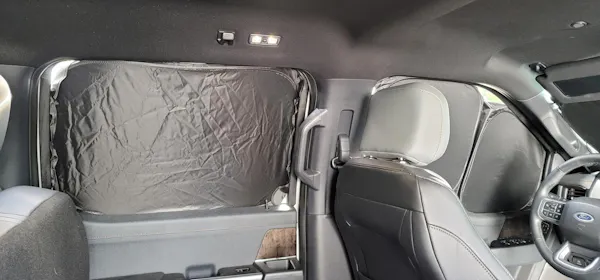
"This fits perfectly in my 2023, F150 Lightning. Not sure if I got the correct package, but this one included the cover for the back window as well. They included some clips that would secure the covers in the window tracks. But the fit is very snug, and I didn't need to use the clips. The material quality is pretty decent for the price. The only complaint I have is that there i"
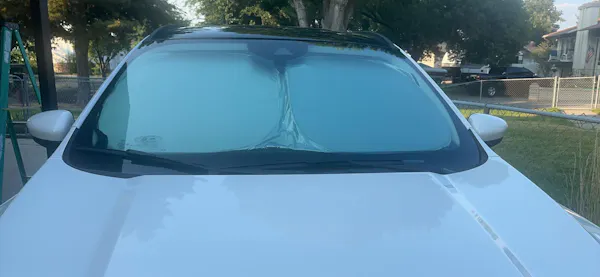
"I have a 2022 ford escape. The fit is tight against the windshield with all edges covered. Easy to fit around the rear view mirror due to the Velcro. I consider it a perfect fit. It’s been well over 100 degrees outside. I have black interior with leather seats. I’ve noticed a huge difference when I get in my car. My only issue is I have a hard time folding it. I’ve managed it o"
Not sure a windshield sunshade is worth it? Read Do Windshield Sunshades Actually Work? How 3 Types Compare for how the main types compare.
Updated 2026-11-06: added an FAQ on how to choose F-150 sunshade size by generation (no invented inch chart).
Sources & References
- Vanos, Middel, Poletti & Selover (2018), Temperature 5(3):276-292 — Peer-reviewed measurement of cabin and surface heating in enclosed vehicles under solar radiation.
- NoHeatStroke.org — Jan Null, San Jose State University — Vehicle cabin temperature-rise data and pediatric vehicular heatstroke tracking since 1998.
