
The honest answer to "how long does a car cover last" is anywhere from 4 months to 8 years — depending almost entirely on the material and how aggressively your local climate beats it up. The number on the box ("warranty for 5 years") rarely matches reality. What does match reality is the layer count, the coating chemistry, and where you live.
This guide is the real-world durability data we've collected from car covers in service for 1, 3, and 6 years. If you're shopping right now, jump to the custom car cover collection; if you want to understand what you're buying, read on.
The Three Failure Modes
Car covers don't fail one way — they fail in three different ways depending on conditions:
- UV degradation: outer layer fades, becomes chalky, eventually waterproof membrane breaks down
- Mechanical fatigue: seams stretch, hems lose elasticity, tie-down loops tear out
- Abrasion: wind whips the cover against the car, fabric thins where it contacts emblems and door handles
A high-UV climate (Phoenix, Vegas, Miami) accelerates failure mode 1. A high-wind climate (Plains, Wyoming, coastal Northeast) accelerates failure modes 2 and 3. A moderate climate (Pacific Northwest, mid-Atlantic) gives you more years from the same cover.
Material Layers and Real Lifespan
Manufacturers love to advertise layer count. Here's what each layer count actually means in years of service:
| Construction | Mild Climate | High UV | High Wind | Typical Cost (full-size SUV) |
|---|---|---|---|---|
| 1-layer polypropylene | 1-2 years | 3-6 months | 4-8 months | $20-40 |
| 3-layer (PE + batting + soft inner) | 3-4 years | 1.5-2 years | 2 years | $50-80 |
| 5-layer (microporous PU) | 5-7 years | 3-4 years | 4 years | $90-130 |
| 6-layer (with extra UV outer) | 7-9 years | 5-6 years | 5-6 years | $130-180 |
Cost-per-year math is what matters. A $30 single-layer cover in Phoenix lasts 6 months — that's $60/year. A $150 six-layer cover in Phoenix lasts 6 years — that's $25/year. The "premium" cover is actually the cheaper option over time, plus your paint takes far less abuse.
Material Chemistry: What Each Layer Actually Does
Polypropylene (single-layer covers)
Polypropylene is the cheapest waterproof fabric — same material as plastic shopping bags. It's stiff, not breathable, and degrades fast under UV. Single-layer polypropylene covers are a temporary solution — fine for a 2-week vacation, terrible for daily use.
Polyester with PE Coating (3-layer covers)
The middle tier. Polyester is more flexible than polypropylene and the PE (polyethylene) coating provides waterproofing. The downside is the coating cracks under UV in 18-24 months and the cover starts leaking at the creases. Once it leaks, every storm soaks the soft inner layer and the cover stays damp against your paint.
Microporous Polyurethane (5-layer covers)
This is where car covers start working properly. Microporous PU is a membrane with pores small enough to block liquid water but large enough to let water vapor through. Translation: rain stays out, sweat (from your paint warming up during the day) gets out. This is the same membrane technology used in Gore-Tex jackets.
5-layer covers pair the PU membrane with foam insulation and a soft fleece inner layer. The fleece is what actually touches your paint, and that's the layer that has to be soft and lint-free — a rough inner layer scratches paint faster than no cover at all.
Multi-Layer with UV-Resistant Outer (6-layer covers)
The longest-lasting category. The 6th layer is a UV-stabilized outer membrane that protects the PU layer underneath. This pushes lifespan in high-UV climates from 3-4 years (for 5-layer) to 5-6 years.
The Ford F-150 4-door cover, Toyota 4Runner cover, and Dodge Challenger cover are all 6-layer constructions designed for vehicle-specific fitment. Browse the full lineup in the custom car cover collection.
Climate-Specific Lifespan
Phoenix, Las Vegas, Inland Southern California
UV is the killer here. Even a 6-layer cover will show outer-fabric chalking by year 4. The waterproof membrane underneath is still fine — the cover loses sheen long before it loses function. We see customers in these climates rotating to a fresh cover every 5-6 years, with the old one demoted to garage-only or backup duty.
Florida, Coastal Texas, Gulf States
UV plus salt air plus daily afternoon thunderstorms. The salt accelerates seam degradation and tie-down loop failure. A 6-layer cover lasts 4-5 years here. Owners who hose the cover off with fresh water every couple of weeks extend that to 6+ years.
Northeast, Midwest, Pacific Northwest
Mild on fabric. UV is moderate, wind is moderate, no salt air (except direct coastal). 6-layer covers last 7-9 years easily. The bigger concern in these climates is whether the cover is breathable enough — trapped moisture from condensation is the dominant paint risk.
Plains, Mountain West, Wyoming
Wind is the killer. Sustained 30+ mph winds for days at a time abrade the fabric against emblems, mirrors, and bumpers. A correctly tied-down cover lasts 5-6 years. A loose cover lasts 18 months because the constant flapping wears holes in the high-contact spots.
Care Practices That Actually Extend Lifespan
1. Wash It Once a Year
Cold water, mild detergent, hose rinse. Don't put it in a washing machine or dryer — the agitation will tear the seams. Hang it over a clothesline or fence to drip-dry. Washed covers last roughly 30% longer than never-washed ones because UV degradation accelerates on dirty fabric.
2. Don't Cover a Wet Car
Putting a cover on a wet car traps water against paint for hours or days. Even a breathable cover can't evacuate that much moisture fast enough. If your car is wet, give it 30 minutes to surface-dry before covering.
3. Inspect Tie-Downs Monthly
Most cover failures start at the tie-down loops. Check the stitching once a month — when you see fraying, reinforce it with needle and thread before it pulls through. A 5-minute repair extends cover life by years.
4. Rotate Covers If You Have a Spare
If you can stomach owning two covers, rotating them quarterly extends total useful life beyond the sum of their individual lifespans. The "resting" cover gets to dry out completely between uses, which slows mildew and seam degradation. This is overkill for daily drivers but standard practice for collector-car owners.
Vehicle-Specific Considerations
Lifespan estimates above assume a correctly sized cover. A wrong-size cover (universal on a sedan it doesn't fit, sedan cover on an SUV) fails 2-3x faster because of mechanical stress. Examples of correctly-sized covers in the catalog:
- Compact SUVs: Toyota RAV4 cover, Toyota 4Runner cover
- Mid-size sedans: Toyota Camry cover, Chevrolet Malibu cover
- Full-size trucks: Ford F-150 cover, Ford F-250 cover, Toyota Tacoma cover
- Performance coupes: Dodge Challenger cover
Full lineup at custom car cover collection.
UV Index and Outdoor Parking Hours
The two variables that matter most for cover lifespan are average daily UV index and hours of outdoor parking. A simple scoring framework:
| UV Index Average | Daily Outdoor Hours | 6-Layer Cover Lifespan |
|---|---|---|
| 3-5 (mild — most of US) | 4-8 hours | 7-9 years |
| 3-5 (mild) | 16-24 hours (street parked) | 5-7 years |
| 6-8 (high — Texas, AZ, FL) | 4-8 hours | 5-6 years |
| 6-8 (high) | 16-24 hours | 3-4 years |
| 9-11 (extreme — Phoenix summer, high altitude) | any duration | 3-5 years |
Garage-kept vehicles where the cover is used only weekly (collector cars, second vehicles) can see lifespans approaching 12-15 years on a 6-layer cover.
The "Better Cover or Better Garage" Math
One question we get often: should I spend $150 on a premium cover, or $300 on a portable car shelter? The answer depends on parking geometry. A car shelter blocks UV from above but not from the sides — and the sides are where UV does the most damage to side panel paint and tire sidewalls. A high-quality cover blocks UV from all angles.
For most owners, a 6-layer cover outperforms an open-side car shelter for paint and interior protection. A fully enclosed garage beats both, but that's a different cost category entirely.
When to Replace
Three signs your cover is at end of life:
- Outer fabric is chalky to the touch — UV has broken down the surface coating. Underneath, the waterproof membrane is breaking down too.
- Water beads stop forming — fresh covers cause water to bead and roll off. End-of-life covers absorb water like a towel.
- Visible holes, frayed edges, or stretched-out elastic hems — at this point the cover is doing more harm than good (dirt and grit work in through the holes and abrade paint).
Bottom Line: Pay for Layers, Pay for Fit
The best money you can spend on a car cover is on layer count and on getting one sized for your specific vehicle. A 6-layer custom-fit cover at $150 outperforms a $40 universal in every climate and over every time horizon. The cost per year is lower, the paint protection is better, and you don't end up with the universal cover's "this almost fits" annoyance every single time you put it on.
Browse vehicle-specific options in the custom car cover collection, or use the vehicle finder on the homepage to filter by your year, make, and model. Need help matching a non-standard trim level (long-bed truck, extended cab) — the team responds within 24 hours through the contact page.
Real owner reviews — How Long Do Custom Car Covers Last? Material Comparison Guid
Pulled from our verified Judge.me review feed. We did not edit, paraphrase, or shorten beyond what fits — these are real buyers who left us reviews on this product category.
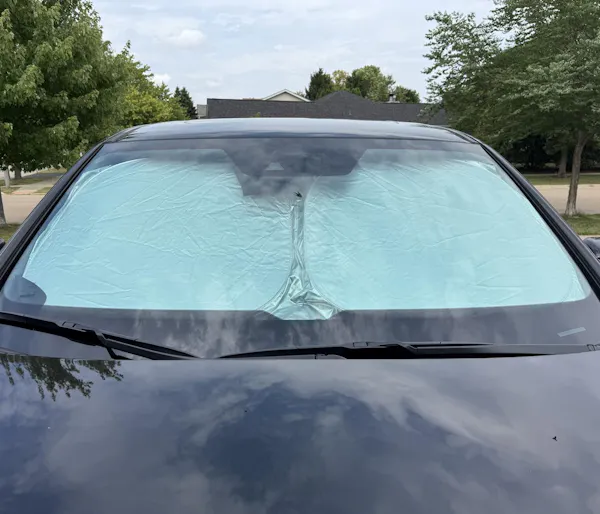
"I have a 2025 Honda Ridgeline, I spent about 1 hour reading over all the reviews of the front windshield cover for this brand as well as other brands. I bought 3 in total. They all will work effectively. I tested it on my 2016 Toyota Sienna as well as my 2016 Acura RDX. Because of the way they are made, there is a lot of flexibility to the coverage and size flexibility. It all "
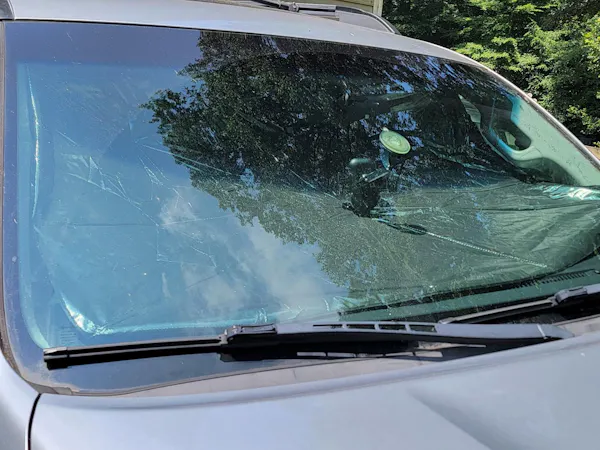
"This is the easiest to use windshield sun screen that I've ever used. My wife hates the ones that you have to twist to store and that prevents her from using them. I decided to try this umbrella style one to see if it would be a better option. The first thing that surprised us was how small it is in the folded up form. It's the size of a portable umbrella (roughly 15 inches lon"
Sources & References
- ASTM D751-19 — Coated Fabrics Test Methods — Standard methods covering coated-fabric strength and hydrostatic resistance.
- ASTM D5034-21 — Breaking Strength of Textile Fabrics — Standard test method for fabric tensile/grab strength.
- The Skin Cancer Foundation — UV Radiation — Medical reference on UV exposure, glass transmission, and skin-damage risk.
