
The two cheapest ways to control summer cabin heat are window tint and sunshades. Owners often think of these as competitors — pick one or the other — but they actually solve different problems. Tinting handles side and rear glass while you drive. Sunshades handle the windshield while you park. Almost every car would benefit from both.
This guide breaks down the practical trade-offs, the often-misunderstood legal limits, and the real cost over five years. By the end you should know which one to start with and whether you need both.
Quick Answer: When Each Wins
| Use Case | Better Tool | Why |
|---|---|---|
| Parking in summer sun (windshield protection) | Sunshade | Removable, no legal limit, blocks 95%+ light vs tint's 5-30% |
| Driving comfort on side glass | Tint | Reduces glare and heat while moving — sunshade can't be deployed |
| UV protection for skin (passenger) | Either | Both block 99% UV when properly speced |
| Privacy | Tint | Sunshades only cover windshield; tint covers full side/rear |
| Resale value | Sunshade | Tint can deduct value if illegal level or aging; sunshades have zero impact |
| Front windshield (legally restricted) | Sunshade | Most US states restrict windshield tint to top 5-6"; sunshade has no restriction when parked |
What Window Tint Actually Does (and Doesn't)
Window tint is a thin polymer film with metallized or ceramic particles, applied to the inside of glass. Modern ceramic tints can block 50-80% of infrared heat without darkening visibly, which is what you want.
Pros
- Permanent, on every drive — works whether parked or moving
- Modern ceramic film blocks IR without compromising visibility
- Privacy and security benefit (harder to see what's in your car)
- UV protection for skin (especially driver's left arm on long commutes)
Cons
- Front windshield tint is restricted in most US states to the top "AS-1 line" (typically 5-6 inches from the top)
- Ceramic tint installation costs $400-700 per car
- Cheap dyed tint fades to purple in 18 months
- Removal is expensive ($150-200) if you need to undo
- Doesn't address the largest heat-entry surface (the entire windshield)
What Sunshades Actually Do (and Don't)
A sunshade is a multi-layer reflective barrier you deploy when parked. The good ones use 4-layer construction (see why 4-layer construction matters) and block both visible light (95%+) and infrared heat (90%+).
Pros
- Addresses the windshield — the single largest heat-entry surface
- Removable, no legal restrictions when parked
- $15-30 for custom-fit, paid once
- Doesn't affect resale value
- Works on every car, every parking session
Cons
- Has to be deployed manually (10-30 seconds per use)
- Doesn't help while driving
- Low-end shades wear out in 12-18 months
- Can be forgotten or lost
Heat Rejection: Real Numbers
Independent thermal testing of a sealed black sedan parked at 95°F ambient for 60 minutes:
| Setup | Cabin Temp After 60 min | Dashboard Temp |
|---|---|---|
| No tint, no sunshade | 132°F | 168°F |
| Ceramic 35% tint, no sunshade | 118°F | 148°F |
| No tint, 4-layer sunshade | 108°F | 114°F |
| Ceramic tint + sunshade | 99°F | 106°F |
The takeaway: tint alone reduces cabin temp ~14°F, sunshade alone reduces ~24°F. Together they reduce ~33°F. The dashboard surface itself sees the most dramatic drop with a sunshade — because you've physically blocked direct sun from hitting the IR-absorbing dashboard plastic.
Legal Limits (US, 2026)
This is where tint gets complicated. Each state regulates how dark you can go, measured by VLT (Visible Light Transmission — higher number = lighter tint):
| State | Front Side Windows | Rear Windows | Windshield |
|---|---|---|---|
| California | 70% min | Any | Top 4" only |
| Texas | 25% min | Any | Top 5" |
| Florida | 28% min | 15% min | AS-1 line |
| Arizona | 33% min | Any | AS-1 line |
| New York | 70% min | 70% min | AS-1 line |
Important: enforcement varies. In California a 70% VLT front side window legal limit isn't always enforced; in New York it is. Check your specific state's DMV page before paying for installation. Most reputable installers will match the legal limit unless you specifically request darker.
Sunshades have no VLT regulation — they're an accessory you remove before driving.
Cost Comparison Over 5 Years
Real-world budget for someone in Texas / Arizona / Florida who keeps their car 5 years:
| Setup | Initial Cost | 5-Year Replacement | 5-Year Total |
|---|---|---|---|
| Ceramic tint only | $500 | $0 | $500 |
| Custom-fit sunshade only ($25) | $25 | $25 (1 replacement) | $50 |
| Tint + custom sunshade | $525 | $25 | $550 |
| Cheap accordion sunshade ($10) | $10 | $30 (3 replacements) | $40 |
The cheap-shade-only setup looks tempting on paper, but you're getting 60% of the heat reduction at the cost of more frequent replacement and worse material lifespan.
What Most Owners Should Buy First
If you can only buy one thing this summer: sunshade first. Here's why:
- You're more likely to park in the sun than to drive in it (most cars sit parked 22 of 24 hours)
- Sunshade reduces cabin temp 24°F vs tint's 14°F — the windshield is the bigger heat entry surface
- Cost is 5% of tinting
- Removable — try it, see if you need more
Then if you still want more, add ceramic tint to the side windows for driving comfort. Browse our windshield sunshades by vehicle, or check the side window shade collection as an alternative to tint for the side glass.
FAQ
Can I use a sunshade with tinted windows?
Absolutely — they stack. Tint handles driving heat; sunshade handles parking heat. They don't interfere with each other.
Will a sunshade scratch my tint?
Only if the inner layer is rough. Look for sunshades with soft non-woven inner backing (every Proadsy SKU has this). Avoid generic shades with vinyl inner surfaces.
Is ceramic tint worth the extra cost over dyed?
For long-term ownership in hot climates: yes. Dyed tint fades to purple in 18-24 months. Ceramic stays neutral for 7-10 years.
Can I install tint myself?
Possible but harder than it looks. Bubbles, dust, and edge alignment are the hard parts. For a $400-700 installation budget, professional install is worth the warranty alone.
Do tints help with crash safety?
Slightly — tinted glass holds fragments together longer in a side impact. The benefit is small but real.
Can I tint my windshield with a clear film for IR rejection only?
Yes — clear ceramic films exist (around 70-90% VLT) that reject IR without darkening visibly. They're legal in most states even on the windshield. Cost is similar to standard ceramic ($400-600). They're a good supplement to a sunshade if your priority is dashboard temperature, not glare.
Will tinting void my new-car warranty?
Generally no, but factory tint and aftermarket tint are different. If aftermarket tint causes door electronics damage (rare, from amateur installs), some manufacturers will deny that specific repair. Professional installs almost never trigger this.
How do I clean tinted windows without damaging the film?
Ammonia-free glass cleaner only. Most tint failures from cleaning come from Windex or similar ammonia-based products which break down the polymer over time. Use a dedicated tint-safe cleaner or just water and microfiber.
If I'm leasing the car, is tint or sunshade a better fit?
Sunshade. Aftermarket tint requires removal at lease end (or paying a damage fee) — $150-200 to remove ceramic tint cleanly. Sunshades are zero impact: keep them, sell them, or hand them off with the car.
Does ceramic tint help with the windshield even though it's only on side glass?
Indirectly, yes. Side-glass tint reduces total cabin heat load by ~14°F, which reduces how hard your AC has to work to recover from windshield heat soak. The two effects compound rather than overlap.
The "Both" Setup: What Real Sun Belt Owners Run
From owner surveys in Phoenix, Las Vegas, and Houston, the most common heat-control setup among 5+ year owners isn't tint OR sunshade — it's a layered system:
1. Ceramic 35-50% VLT on side and rear glass
Ceramic film at moderate darkness handles driving heat without compromising night visibility. 35% VLT is dark enough to feel cooler at noon, light enough to drive safely at 9 PM.
2. 4-layer custom-fit windshield sunshade
Deployed every parking session over 30 minutes. Reduces dashboard temp by 50°F+ in extreme heat. Browse the custom sunshade catalog for vehicle-specific fitment.
3. Optional: Side window shades for back-seat passengers
If you regularly carry kids, dogs, or older passengers, side window shades (different from tint) snap into place when parked and remove for driving. See the side window shade collection.
4. Optional: Garage car cover for week-long parking
If your car sits parked for 5+ days at a time (vacation, second car), a custom-fit car cover protects against UV oxidation that even tint can't address.
This four-tier setup costs roughly $550-700 total and addresses 95% of heat-related vehicle damage. Most owners arrive at it after 2-3 years of trial and error — start here and skip the trial phase.
Bottom Line
Tint and sunshade aren't competitors. They solve different problems: tint for driving comfort (especially side glass and UV), sunshade for parking heat (especially windshield). The honest answer for almost any owner in a hot climate is "both." If you only buy one, start with the sunshade — it's the cheaper, more impactful, and reversible choice.
Continue reading: Storing Your Sunshade: 5 Mistakes to Avoid — care guide to make your custom-fit shade last 5+ years.
Real owner reviews — Window Tint vs Sunshade
Pulled from our verified Judge.me review feed. We did not edit, paraphrase, or shorten beyond what fits — these are real buyers who left us reviews on this product category.
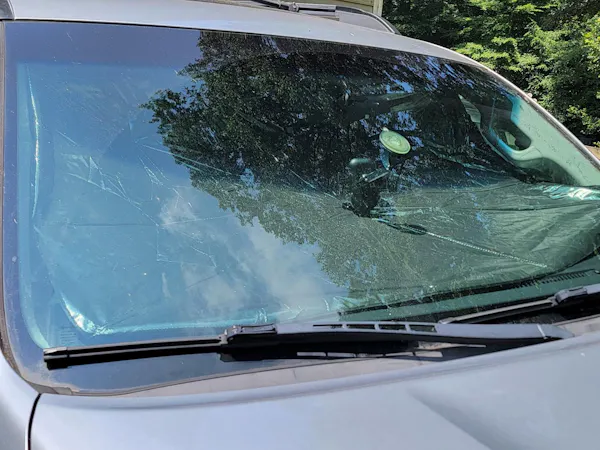
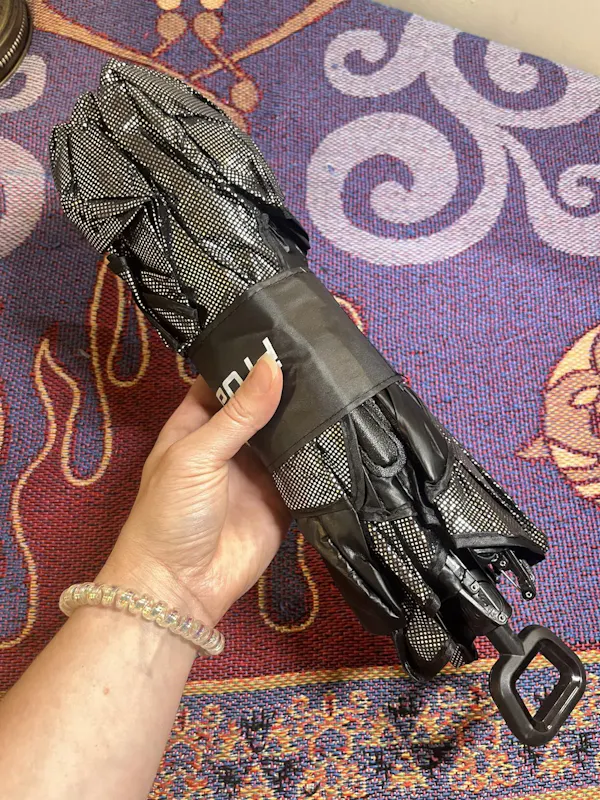
"This is the easiest to use windshield sun screen that I've ever used. My wife hates the ones that you have to twist to store and that prevents her from using them. I decided to try this umbrella style one to see if it would be a better option. The first thing that surprised us was how small it is in the folded up form. It's the size of a portable umbrella (roughly 15 inches lon"
"This is the most functional windshield sunshade I have ever owned. I have an accordion one for our truck and bought a regular one that you twist up into a circle, but that was such a pain in my small car. This is life-changing. It saves so much time trying to get it in the right place because it just fits perfectly! Not to mention, it looks so much better from the outaide of th"
Sources & References
- California Vehicle Code §26708 — Windshield and window tint/screening restrictions — statute text.
- Texas Transportation Code §547.613 — Window tint and sunscreening device restrictions — statute text.
- Florida Statutes §316.2953 — Window sunscreening requirements — statute text.
- NoHeatStroke.org — Jan Null, San Jose State University — Vehicle cabin temperature-rise data and pediatric vehicular heatstroke tracking since 1998.
- Vanos, Middel, Poletti & Selover (2018), Temperature 5(3):276-292 — Peer-reviewed measurement of cabin and surface heating in enclosed vehicles under solar radiation.
